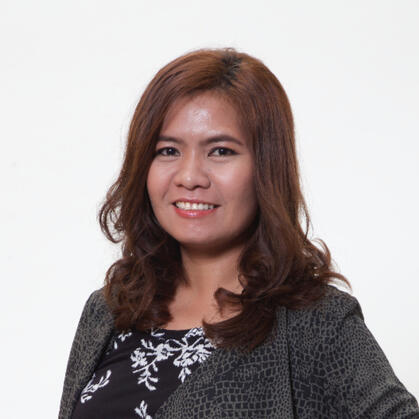
Hi, I'm Sheila. Thanks for visiting. Here, I'll be talking about myself and my work experience. Please read on if you're curious.
The year was 2004. I was fresh out of college when fate intervened in the most unexpected way.
I had been interviewing the production head of one of the biggest TV commercial production houses in Makati City, in the Philippines, for a magazine piece I was working on as a freelance writer. Somewhere between questions about her career trajectory and the challenges of the industry, she learned that I had majored in Film and didn't have what she called a "real job."
"Why don't you work for us?" she asked, almost casually.
Just like that, I found myself saying goodbye to my low-paying lifestyle magazine gig to become a Production Assistant for TV commercials.
Learning to Compress Stories Under Fire
The world of TVC production was chaotic and intoxicating. Everything moved at breakneck speed — clients changing their minds at the last minute, directors throwing creative tantrums, and budgets that seemed to have more zeros than I'd ever seen in my life.
But here's what I learned in those frantic months: I learned that every 30-second commercial had to contain an entire emotional journey. There was no room for waste, no space for unclear messaging. Every frame, every word, every beat had to earn its place. It was creative compression at its most brutal and most effective.
I quickly learned from my interactions with senior colleagues that this was indeed a lucrative industry. Maybe I can build my career here. Years later, when I started creating documentaries for an NGO, I would remember those lunches during client and agency meetings with something close to nostalgia - the kind of luxurious spreads that felt almost obscene in their abundance.
But it didn't take long for me to realize that this world wasn't meant for me.
You see, I am extremely introverted. Back then, I could survive using fewer than 50 words a day. I was the kind of person who preferred observing to speaking, who found energy in solitude rather than in the constant buzz of collaboration that defined the industry.
But what I initially saw as a weakness was actually becoming my superpower. While others were networking, I was watching, collecting fragments of human behavior that would later become my creative fuel. I learned that my introversion wasn't a barrier but it was my observational advantage.
After eight months, I called it quits.
Finding the Human Story
My next job came almost immediately. In fact, I was able to leave the TVC industry because I had been accepted at a major TV network, only the number 3 station in the Philippines at the time, but I’ll take it because of a chance to work in TV. I took on the role of Assistant Production Manager in their Sports Department.
The timing was perfect, or perhaps perfectly chaotic. It was 2005, and the Philippines was hosting the Southeast Asian Games. Due to a shortage of manpower and my film background, I found myself wearing two hats: handling logistics as a Production Manager while moonlighting as a Segment Producer covering the games.
Come to think of it, they never paid me double for the dual role. I was a passionate newcomer, willing to be used and abused in the way that only the young and eager can be.
Those early days were a whirlwind of deadlines and adrenaline. I found myself crafting narratives for basketball games, volleyball matches, and boxing bouts. There was even a time I covered a local cockfighting tournament — an experience that taught me that storytelling could be found in the most unexpected places.
And because of my work, I realized that sports isn't just adrenaline and competition. It's about human stories. I learned to listen and look for the humanity of the players. We created mini-features about their lives — not just their professional achievements, but their personal struggles, their families, their dreams beyond the court or field. We compelled sports spectators to care about the players not just professionally, but personally. The difference now is you'll see those human stories in sports documentaries in different platforms, and not just small segments in between games.
Emotions are universal. A mother's worry for her son is the same whether he's a factory worker or a professional basketball player. The determination to overcome obstacles translates across every field and industry.
Being Quiet in a Noisy World
Live TV taught me something crucial about focus and presence. Live TV is constant movement — you have to be two steps ahead, otherwise you'll be left behind. I learned to focus intensely on what's in front of me in the moment. I developed what I now call a "camera eye", which I defined as the ability to see the story within the chaos.
But as an introvert in this high-energy environment, I had to learn to manage my creative energy differently. I found myself taking long breaks of silence before and after our live broadcasts. It was my way of conserving energy, of recharging so I could be fully present when it mattered.
My day-to-day also meant covering the country's premier basketball league. In high school, I had been something of a basketball fangirl, which made me think I genuinely liked sports. Plus, there was the undeniable convenience of being able to tell people where I worked when they asked. "Yeah, I work for a TV station" — a simple sentence that carried weight and recognition.
There was also a kind of power you think you possess when you exist in the world of famous people, people who appear on television screens across the country. It was intoxicating in its own way, being part of that ecosystem of celebrity and influence.
Understanding Systems and Creative Shortcuts
Looking back, I realize I was developing creative systems out of pure survival. What I learned was that thorough research about the person, event, or sport was actually a shortcut. Painful, thorough research was my secret weapon. When you truly understand your subject, the story writes itself.
I also learned something crucial about what makes content work versus fail: It's not the delivery, but the message. Good delivery helps, but if you're not clear on your message, it will never land. This insight would serve me for decades to come.
But despite the Segment Producer role and the occasional creative stints covering different sports, my main responsibilities as an Assistant Production Manager remained frustratingly technical and non-creative. I knew I wanted to take on a fully creative role. I had no interest in climbing the traditional ladder to become a Production Manager or Associate Producer.
What I wanted was to be a scriptwriter, a director, an editor — anything that would allow me to contribute directly to the creative process, to the actual act of storytelling that had drawn me to this industry in the first place.
So once again, I found myself at a crossroads, ready to make another leap into the unknown.
The NGO Years
In July 2006, I took that leap. I accepted a job at an NGO to create documentary features, and suddenly my world expanded beyond the confines of studios and newsrooms.
This was an exciting time because I finally got to travel - not just to different cities, but to remote provinces all over the Philippines that I had only seen on maps. I created documentaries about poverty alleviation programs, agricultural initiatives in small barrios, and community development projects that were changing lives in ways both small and profound.
It was fulfilling work in a way I hadn't experienced before. I learned how the power of words — carefully chosen, thoughtfully arranged — could inspire real change. I met some of the kindest people I know during this time: farmers who shared their meager meals with strangers, community leaders who worked tirelessly without recognition, children whose smiles could light up entire villages despite having so little.
For two years, I immersed myself in stories that mattered, stories that had the power to move people beyond mere entertainment. But even as I found purpose in this work, I realized I was ready for another change. The restlessness that had driven me from job to job was stirring again, whispering of new possibilities just beyond the horizon.
The Corporate Years & Beyond
My path led me to an international corporation where I took on the role of Scriptwriter and Content Manager. From TV to socially relevant content to corporate content — it was another pivot, another reinvention of what I thought I wanted to do.
This new role allowed me to create video content in both short and long form: corporate videos, event AVPs, web series, sales videos, ecommerce videos. And on the side, even adapting novels for the big screen. Each project was a new challenge, a new story to tell, and I loved every minute of it.
In fact, I loved it so much that I stayed with that company for 13 years.
Looking back, I realize I was essentially doing what content creators do now — just without the platform. I was repurposing stories, creating different formats, understanding audience psychology. I just didn't know it was called "content strategy" yet.
It helped that the company allowed me to travel to many different countries. The allure of exploring the world, meeting people, and learning about different nationalities and cultures became a huge factor in making me stay. I developed such a love for traveling that whenever we had business trips, I would try to squeeze in visits to countries I could sightsee.
I was able to go to many places: UAE, Côte d'Ivoire, Ghana, Malaysia, Singapore, Indonesia, Brunei, Myanmar, Sri Lanka, Japan, Thailand, Vietnam, Cambodia, Hong Kong, Taiwan, and China. Each destination taught me something new about storytelling, about the universal human experiences that transcend borders and languages.
Yes I bit the travel big. But it was not just tourism. It was a way for me to broaden my perspective about the world. Every culture I encountered gave me new insights into human psychology, different ways of seeing and telling stories. I was building a global understanding of what moves people, what connects us across languages and borders.
I Have a Knack for Reading People
Those 13 years led me to create different types of content for diverse audiences of almost all nationalities imaginable. Digital platforms were rising, and with them, new ways of reaching people. I saw an opportunity and grabbed it with both hands.
I dove headfirst into the world of digital content strategy, leading teams of designers, writers, and video creators. We crafted campaigns that spanned social media platforms and email communications, creating content that resonated with a global audience in ways that traditional media never could.
My journey took an unexpected turn when I discovered my knack for "reading" people. This secret talent, coupled with my fascination with personal psychology, became my superpower in creating compelling scripts. I found myself able to tap into the emotions of characters and audiences alike, bringing a new depth to my work that went beyond mere technical skill.
As an introvert, I listen more than I speak. Even now with my clients, I focus on them, understand their business, their problems — and this gives me enough insight to help them solve problems, gain market clarity, clarity in vision, and clarity in messaging.
Throughout it all, my love for Japanese culture has been a constant source of inspiration. From the structured auteurship of their film industry to the subtle nuances in their literature, Japan has shaped my creative perspective in countless ways. It's become such a part of me that friends joke that my travels to Japan are "so me." I feel that Japan really got me to become an explorer — not just of places, but of ideas and possibilities.
Leaving this company was bittersweet because they opened my mind through travels and I met all types of people. I became of the world — an apt shout out to my surname, Del Mundo.
The Director Dreams & Corporate Reality
But all things came to an end. The pandemic hit, and although I stayed all through it, I had to leave in early 2022 for another opportunity. I was headhunted to become a "Director." My official title was "Director of Audience Video." If you study Film, this is the ultimate title for us.
I only stayed for a few months in this role. I moved to a different city, I didn't vibe with the team (honestly), or the kind of corporate setup they had. I can only describe it as someone summoned to the great confines of a cushy office but expected to work guerrilla-style.
I'm not the creative and hungry version of myself who was asked to become a segment producer for free. I wanted freedom in my decisions, to truly own up to the "director" title and not report to bosses who are great at huddles, pitch decks, and tracking unnecessary content metrics.
So yes, I left them and embarked on a journey to truly stand for myself and become a full-time freelancer and remote worker.
Ghoswriting And Wearing Many Hats
My very first role was as a ghostwriter for thought leadership and HARO inquiries and backlinks for an agency. I was a security expert, a lawyer, an interior designer, a SaaS founder, and even a doctor during the nights I worked. Writing in the position of these different roles and thoughts made me think of our knack of asking ChatGPT or Claude to "Act as..." I was literally that person who wore many hats to create results for others.
This experience taught me something crucial about adaptability and research — skills that would become essential in my solopreneur journey. I learned to quickly understand different industries, speak their language, and find the human stories within technical subjects.
I did that for months until I realized I don't want to work graveyard shifts. I'm gaining weight and I don't like it. Even if I work at night, I have day responsibilities, and I was afraid my health would suffer. So I quit. I listen to my body's signals, and if my goal is to be free, this will not make me free.
Starting My Solopreneur Journey
From here on, I worked for a marketing agency client, a private equity professional, and real estate broker to name a few while trying to build my own offers. I am building myself while navigating through this solopreneur business.
What I've learned is that the voices inside — the ones I used to silence in those early TVC days — are actually my greatest assets. If I could tell my younger self anything about managing creative energy, it would be: Do not block the voices inside. Let them grow and nurture them. And find an outlet in the outside world to organize them — it can be your Notes app, a blog, a secret email, whatever. But write it down so you can refer to it in the future.
Today, my work lives where storytelling meets operational design. The same instincts that helped me shape narratives now help me create clarity inside businesses. I've always been drawn to distilling chaos, mapping moving parts, and understanding how people think and behave. That work naturally evolved into something new: automation.
The rise of AI didn't just change the landscape for creators. It opened a path for people who think in loops, patterns, and quiet logic. I watched small teams and independent operators drown in scattered tools, repetitive tasks, and systems built to frustrate rather than serve. I knew I could help.
That's how ShimaruOps began — a studio built around one idea: remove friction so ideas move.
ShimaruOps
Now my work goes beyond content. I design workflows that lighten operational load. I build automations that support real decision-making. I help founders close loops so their businesses can finally breathe. My goal: clarity that scales, systems that serve.
If you're building something and the behind-the-scenes feels heavy, fragmented, or overwhelming — I can help. If you want automation that keeps the human thread intact — this is where I work best.
My story isn't shifting away from creativity; it's expanding. Every script, documentary, and campaign taught me to understand people, patterns, and purpose. Automation is simply the next medium. I call it another way to shape meaning, solve problems, and build things that last.
I'm still learning, still building, still figuring things out as ShimaruOps grows. If you're working through similar questions — how to use AI meaningfully, how to build systems that don't drain you, how to run a business that feels sustainable — I'd be glad to connect.
I'm interested in work that's thoughtful, sustainable, and honestly useful.